


Breast Lift Surgery (Mastopexy) Guide
Many women notice after pregnancy or breastfeeding that their breasts have lost their volume, shape, and elasticity, resulting in sagging. As skin loses its natural elasticity, breasts tend to lose their firmness and begin to droop. Even without pregnancy, these structural changes can occur over time due to aging and weight fluctuations.
What is a Breast Lift (Mastopexy)?
A Breast Lift, medically known as Mastopexy, is a surgical procedure designed to reshape and elevate sagging breasts to a higher position without significantly altering their overall volume.
Unlike mastopexy, the primary objective of breast augmentation or reduction is to modify overall breast volume. However, in mild cases of skin laxity, breast augmentation alone using implants may restore adequate firmness. In such cases, patients must consider that implants add a specific volume, which may result in an unexpected increase in breast size. When both elevation and volume enhancement are desired, performing a combined procedure (Mastopexy with Augmentation) is the ideal approach.
It is medically recommended to delay mastopexy until after completing childbearing and breastfeeding. While mastopexy does not impede future pregnancies, subsequent pregnancy and lactation can cause skin to stretch again, leading to recurrent breast sagging.
Ideal Candidates for Mastopexy
During the initial consultation, the surgeon will review your medical history, including previous breast surgeries, number of pregnancies, duration of breastfeeding, and any family history of breast conditions.
The ideal candidates for mastopexy are women who:
-
Are in good overall physical health.
-
Are emotionally stable and realistic regarding surgical outcomes.
-
Suffer from mild to severe breast sagging.
While breasts of any size can be lifted, long-term stability may be more challenging to maintain in heavier breasts. Although women of various adult ages can undergo this procedure, it is typically not performed until full breast development is complete. Patients planning future pregnancies should ideally postpone surgery.
Important Pre-Op Notice: Smokers must quit smoking prior to surgery. Nicotine constricts blood vessels, reduces local blood flow, and significantly impairs wound healing. Aspirin and non-steroidal anti-inflammatory drugs (NSAIDs) increase bleeding risks and must be discontinued at least 10 days before surgery.
The surgeon evaluates variables such as age, breast size, skin elasticity, and the necessity of implants to select the most suitable surgical technique. The relocation of the nipple-areolar complex, scar placements, and projected post-surgical contours will be thoroughly explained.
The Surgical Procedure
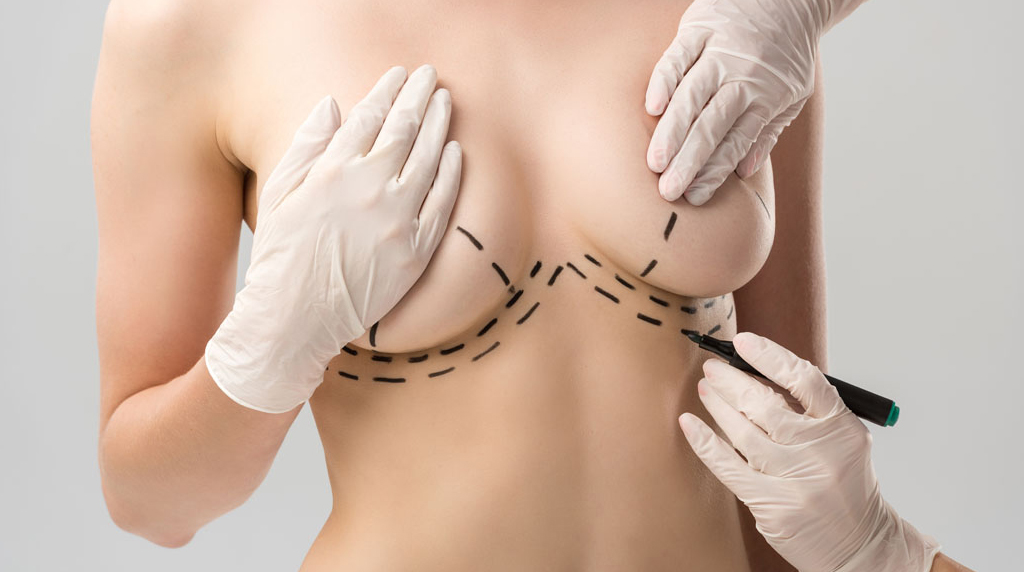
Prior to surgery, precise markings are drawn on the patient’s skin in a standing position to determine the new anatomical contours. During the operation, excess skin is removed, and the nipple, areola, and underlying glandular tissue are repositioned higher on the chest wall.
Typically, the nipple is repositioned horizontally in alignment with the mid-arm level and inframammary fold. Incision patterns depend on the degree of ptosis (sagging):
-
Periareolar Lift (Donut Lift): For mild sagging, incisions are confined around the outer edge of the areola.
-
Vertical Lift (Lollipop Lift): For moderate sagging, an additional vertical incision extends from the areola down to the breast crease.
-
Anchor Lift (Wise Pattern): For severe sagging, a third horizontal incision is made along the inframammary fold.
Surgical drains may be placed beneath the skin depending on tissue resection to prevent fluid accumulation (hematoma/seroma). Firm protective dressings are applied over the incision sites.
Anesthesia and Surgery Duration
Mastopexy is typically performed under general anesthesia and lasts approximately 2 hours. A standard overnight hospital stay is generally recommended for optimal monitoring.
Post-Operative Care & Recovery
-
Pain Management: Moderate discomfort is expected for the first few days and is effectively managed with prescribed analgesics.
-
Circulation: Early mobility is essential to prevent deep vein thrombosis (DVT); regular flexing of feet, knees, and ankles is recommended.
-
Drain Removal: Surgical drains, if placed, are typically removed within 48 hours.
-
Dressings and Support Bra: Initial dressings are removed after a few days. Patients are instructed to wear a specialized surgical support bra without underwires.
-
Sutures: Absorbed gradually over time as internal suture materials dissolve.
Potential Complications & Normal Healing Variations
When performed by an experienced plastic surgeon, mastopexy carries low complication rates.
-
Infection: Rare, but minimized through sterile surgical technique and prophylactic antibiotics. Mild superficial infections near incision lines generally clear with a two-week course of antibiotics.
-
Swelling and Bruising: Mild to moderate edema is naturally reabsorbed by the body. Bruising resolves within 1 to 2 weeks, while minor swelling may persist for up to 6 months.
-
Asymmetry: Surgical markings aim for symmetry; however, tissue contraction during healing may cause subtle variations (keeping in mind that natural breasts are inherently asymmetrical).
-
Temporary Tissue Firmness: Localized tissue firmness near suture lines is part of natural scar maturation. Targeted post-op massage, as advised by your surgeon, accelerates tissue softening over several months.
-
Nipple Elevation & Sensation: Breasts may initially appear artificially high post-operatively, settling into a natural contour over time due to gravity. Temporary numbness or reduced sensation in the nipple-areolar complex is common due to microscopic nerve disturbance and typically recovers within a few months.
Scar Evolution and Maturation
Incision lines are placed around the areola and along natural breast contours to remain discreet, even in swimwear or low-cut garments. Scars initially appear red, raised, or slightly itchy, gradually flattening and fading over time. Scar maturation is a gradual process that can take up to two years. Daily scar massage and topical therapies are recommended once incisions have fully healed.
Returning to Daily Activities
Healing is a continuous, step-by-step process. Most patients resume light activities within 1 week, while others may require 2 weeks of rest. Strenuous exercises and heavy lifting should be avoided for 4 to 6 weeks as advised by your medical team.